
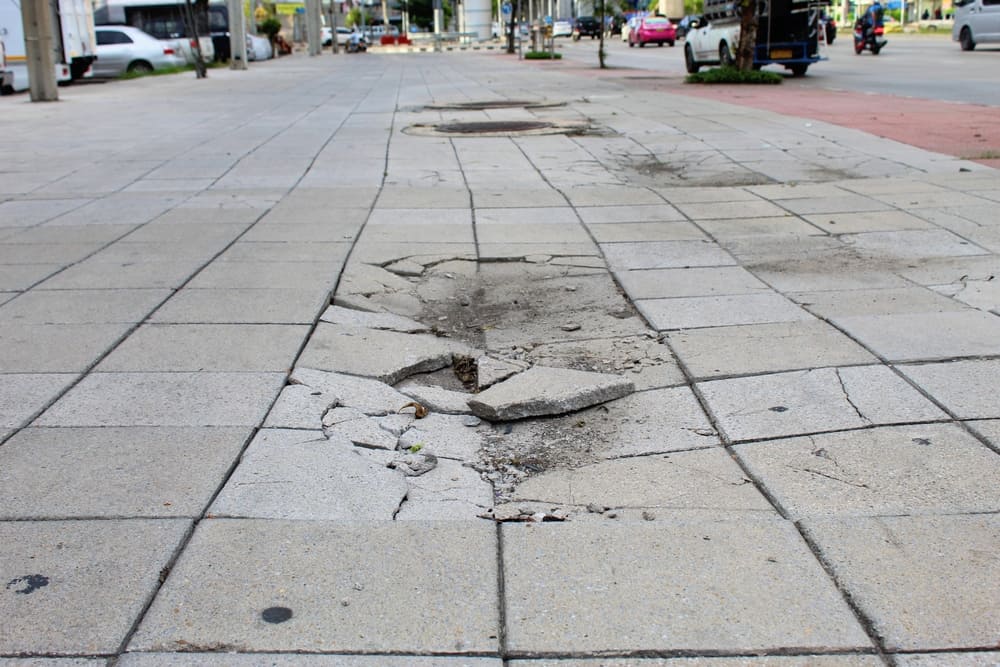
Suing a government entity in California involves a strict set of procedural rules that differ significantly from a standard premises liability claim against a private property owner.
Whether a sidewalk crack qualifies as a legally actionable hazard depends on its size, location, and the circumstances surrounding the fall. A premises liability attorney familiar with California’s government claims process can evaluate whether the specific conditions support a viable claim.
That distinction matters because government entities in California are not automatically immune from liability when a public sidewalk causes injury. They do, however, benefit from significant legal protections that private property owners do not have, and the process for pursuing a claim against them is far less forgiving of missed steps or delays.
Knowing how California law defines a dangerous public condition, what the government’s claims process actually requires, and why the size of a crack is not the only factor that determines whether a claim holds up are all worth considering before drawing any conclusions about a fall on a city sidewalk.
Suing the City Over a Sidewalk Trip and Fall
- A six-month deadline applies: Claims against California government entities require a formal government tort claim filed within six months of the injury, not the two-year window that applies to private parties.
- The trivial defect doctrine is a real obstacle: California courts have dismissed claims involving very minor sidewalk imperfections, but minor is not a fixed measurement. Courts evaluate the full context of the fall.
- Prior complaints strengthen a claim: Evidence that the city received complaints about the same crack before the fall helps establish that the government entity had notice of a dangerous condition.
- Suing the city and a private property owner is sometimes possible: In California, maintenance responsibility for sidewalks sometimes falls on adjacent property owners rather than the city, creating a different path to liability.
- The claims process has no flexibility on deadlines: Missing the six-month filing window almost always ends any chance of recovery against a government entity, regardless of how strong the underlying case might be.
How California Law Governs Injury Claims Against Government Entities
California does not allow injured people to sue government entities the same way they would sue a private business or individual. The California Government Claims Act, codified in Sections 810 and following, creates a separate legal framework governing all claims against state and local government bodies, including cities, counties, and public agencies.
Before filing a lawsuit against a city for a sidewalk injury, an injured party must first submit a formal government tort claim directly to the responsible agency. That claim must be filed within six months of the date of injury. Missing that window almost always forecloses the right to sue, regardless of how serious the injuries are or how clear the city’s responsibility may be.
This deadline catches many injured people off guard. The two-year statute of limitations that applies to most personal injury cases in California under California Code of Civil Procedure Section 335.1 does not apply when a government entity is the defendant.
The six-month clock starts running from the date of the injury, not from when symptoms worsen or when the injured party realizes they have a viable claim.
What the Government Tort Claim Must Include
A government tort claim is a formal written notice, not a lawsuit. It puts the agency on notice that an injury occurred and that the claimant intends to seek compensation. California Government Code Section 910 specifies what the claim must contain.
- Name and contact information: The claimant’s full name and mailing address.
- Date, place, and circumstances of the incident: A description of where and how the injury occurred, including the specific location of the sidewalk defect.
- Description of the injury: A general account of the harm sustained, including physical injuries and financial losses.
- The amount claimed: An estimated dollar amount of damages, or a statement that the amount will be determined at a later date if the total is not yet known.
- The basis for the claim: An explanation of why the government entity is responsible for the injury.
Once submitted, the agency has 45 days to accept or reject the claim. If rejected, the claimant then has six months from the date of the rejection letter to file a lawsuit. If the agency does not respond at all, the window to file suit extends to two years from the original incident date under California Government Code Section 912.4.
The Trivial Defect Doctrine and Why It Matters for Small Cracks
California courts have long recognized a legal principle called the trivial defect doctrine, which holds that a government entity is not liable for injuries caused by minor, insignificant sidewalk imperfections that any pedestrian exercising ordinary care should be able to avoid.
The doctrine exists because cities maintain thousands of miles of sidewalks, and not every small crack or elevation change rises to the level of a dangerous condition warranting legal liability. Courts have acknowledged that requiring perfect sidewalk surfaces would be an impossible standard.
How Courts Evaluate Whether a Defect Is Trivial
No fixed measurement automatically classifies a crack as trivial or dangerous. California courts look at the totality of circumstances surrounding the fall, and several factors consistently appear in that analysis.
- The size and depth of the defect: While courts have sometimes pointed to measurements as a rough reference, a half-inch elevation difference has been found dangerous in some cases and trivial in others depending on surrounding conditions.
- The location of the crack: A crack near a crosswalk, bus stop, or building entrance where pedestrian traffic is heavy and attention is often divided raises different questions than the same crack on a quiet residential block.
- Lighting conditions: A defect that might be easily avoided in daylight can become a genuine hazard at night or in a poorly lit area, and courts consider the conditions present at the time of the fall.
- Visibility of the defect: Cracks obscured by debris, wet leaves, shadows, or surface discoloration that blends with the surrounding concrete are evaluated differently than clearly visible breaks in otherwise well-maintained pavement.
- Prior complaints or known history: Documentation that the city received reports about the same sidewalk segment before the fall significantly strengthens the argument that the defect was not trivial.
Courts weigh these factors together rather than applying any single measurement as a definitive test. A case that looks weak based on the size of a crack alone may look very different once the full context is examined.
Who Is Actually Responsible for the Sidewalk Where You Fell
Responsibility for sidewalk maintenance in California is not always as straightforward as it appears. Many people assume that any public sidewalk is automatically the city’s problem, but California law distributes sidewalk maintenance obligations between municipalities and adjacent private property owners in ways that vary by city and by specific location.
Under California Streets and Highways Code Section 5610, property owners are responsible for maintaining the sidewalk adjacent to their property in a safe condition. Many Orange County cities enforce this obligation actively, placing the burden of repair on homeowners and business owners rather than the municipality.
When a crack results from a tree root pushing up from a privately maintained tree, from a property owner’s failure to address a known deterioration problem, or from a business modification to the sidewalk surface, the adjacent property owner rather than the city may carry liability. That distinction determines which claims process applies and what deadlines govern.
When Both the City and a Private Owner May Share Responsibility
Some sidewalk injury cases involve shared responsibility between a government entity and a private property owner. A city that knew about a sidewalk defect caused by a private property owner’s tree but failed to compel repairs may share liability alongside the property owner.
In those situations, pursuing claims against both parties simultaneously requires careful coordination of different legal processes and deadlines.
That complexity is one reason why early legal consultation matters in sidewalk fall cases. Identifying every potentially responsible party before any deadline passes protects options that a single-focus approach might overlook.
What Damages May Be Recoverable in a City Sidewalk Claim
When a government entity is found liable for a sidewalk injury under California Government Code Section 835, the categories of recoverable damages are similar to those available in other premises liability cases, though government immunity provisions can limit certain types of recovery.
Recoverable damages in a successful government sidewalk claim may include:
- Medical expenses: Emergency care, diagnostic imaging, surgical treatment, physical therapy, and ongoing medical costs connected to the injuries from the fall.
- Lost income: Wages lost during recovery and reduced earning capacity if the injury creates lasting limitations on employment.
- Pain and suffering: Compensation for physical pain, emotional distress, and the impact on daily life and activities.
- Out-of-pocket costs: Transportation to medical appointments, home care assistance, and other direct expenses tied to the injury and recovery.
California Government Code Section 818 prohibits punitive damages against public entities, which limits one category of recovery available in private party cases. That distinction is worth understanding before comparing a government claim to a claim against a private property owner.
FAQ for Suing the City Over a Sidewalk Fall in California
What happens if I miss the six-month deadline to file a government tort claim?
Missing the deadline generally eliminates the right to sue the government entity, with very limited exceptions. California courts have allowed late claims in narrow circumstances, such as when a claimant was a minor at the time of the injury or when there is strong evidence of incapacity during the filing period.
Those exceptions are difficult to establish and not available in most situations. Acting well before the deadline is the only reliable protection.
Can I file a claim if I am not sure whether the city or a private property owner is responsible?
Uncertainty about responsibility is exactly why early legal evaluation matters. A premises liability attorney can identify which entity maintained the sidewalk where the fall occurred, whether the city has received prior complaints about that location, and which legal processes apply. Filing against the wrong party, or missing a deadline while trying to determine responsibility, can affect the entire claim.
Does the city have to fix the crack before I can pursue a claim?
No. A repair made after a fall does not resolve whether the city was negligent before it occurred. Under California Evidence Code Section 1151, subsequent repairs are generally not admissible as direct evidence of negligence, but a claim can still be pursued based on the condition that existed at the time of the injury.
What if I fell on a sidewalk during a rainstorm and the crack was covered by water?
Weather conditions that affect the visibility or severity of a sidewalk defect are part of the overall circumstances courts consider. A crack that becomes more dangerous when wet, or that collects water in a way that obscures its depth, raises additional questions about whether the city adequately maintained the sidewalk for conditions that regularly occur in the area. Those facts strengthen rather than weaken the hazard analysis.
How is fault allocated if both I and the city contributed to the fall?
California’s pure comparative fault system applies in government liability cases as it does in private party claims. Recovery is reduced proportionally by the injured party’s percentage of fault but is not eliminated by a partial-fault finding. How that allocation plays out depends on the specific evidence surrounding the fall.
A Small Crack Can Have Large Consequences
The size of a sidewalk defect rarely reflects the severity of the injury it causes. A fractured wrist from catching a fall, a hip injury on impact with concrete, or a head trauma from an unexpected trip can alter daily life in ways that no one anticipates standing on a public sidewalk.
If the city, a neighboring property owner, or both may bear responsibility for what happened, what would it mean to have those questions answered before any deadline passes?
Aghnami Law Group offers free consultations and is reachable around the clock. Reach out to discuss what happened and what California law may allow in a situation like yours.