
Mission Viejo Truck Accident Attorneys
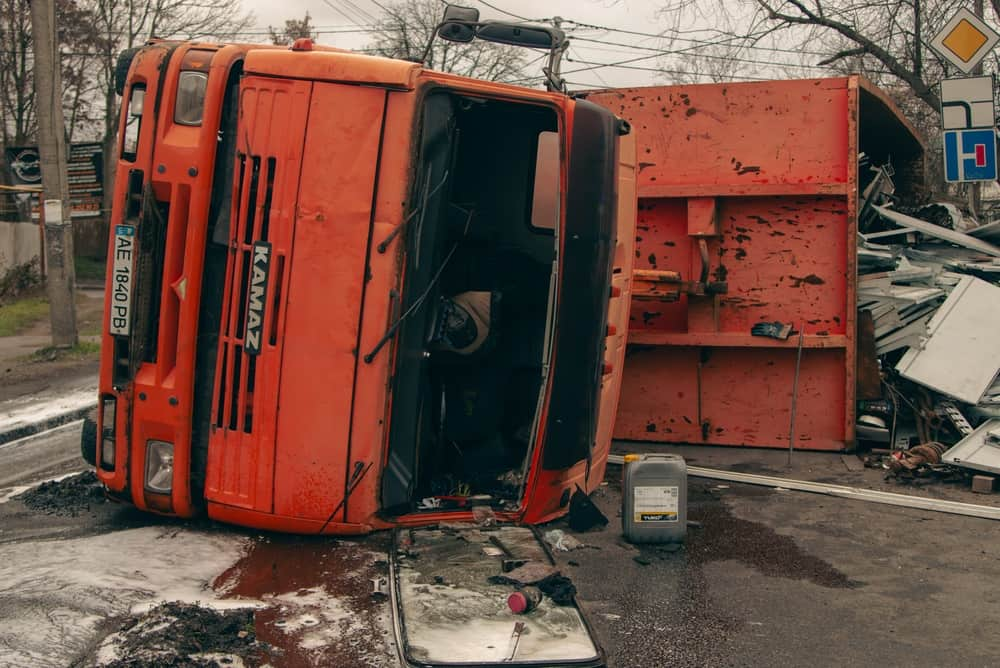
The weeks after a truck crash are their own kind of hard. You are trying to heal while an adjuster keeps calling, the bills arrive faster than the answers, and the trucking company already has people working to limit what it pays.
A Mission Viejo truck accident lawyer at Aghnami Law Group handles that pressure for you. We represent people hurt by big rigs and delivery trucks across Orange County, work out of our Mission Viejo office, and take these cases on contingency, so you owe No Fee unless we win.
If a commercial truck hit you anywhere from the I-5 to Crown Valley Parkway, the sooner someone starts protecting your claim, the more of it survives. Here is what a truck case involves and why being local changes how we handle it.
How a Local Firm Investigates a Truck Crash in Mission Viejo
The evidence that decides a truck case starts disappearing within days, which is why hiring a firm down the road matters more than it sounds. We can reach a crash site on Crown Valley or the I-5 the same week it happens, while skid marks, debris, and the truck itself are still where the collision left them. The carrier’s investigators move that fast too. Getting there first is often what keeps your side of the story on the record.
Same-Week Scene Access
Physical evidence at a crash scene has a short life. Gouges in the pavement get paved over. Debris gets swept. Camera footage from the gas station or the shopping center nearby usually writes over itself in about 30 days. Because we are based here, we can photograph and measure the scene in person and pull footage from the businesses along Marguerite Parkway or La Paz Road before any of it is gone. A firm an hour away, or one that only ever sees the scene in the police report, works from whatever is left weeks later.
Roads We Drive Every Day
We know these corridors because we use them. The I-5 through south Orange County, the 241 connector where trucks come off the toll network, Crown Valley Parkway, La Paz, Marguerite, and Oso. That is not trivia. Knowing where trucks stage for deliveries, where the merges bunch up, and where a bad sightline turns a legal lane change into a collision shapes how a crash gets reconstructed. Local knowledge tells us what to look for before we ever open a file.
Racing the Carrier’s Rapid-Response Team
Large trucking companies send their own adjusters and accident reconstructionists out within hours of a serious crash. Their job is to build the company’s version of events early and lock it in. If you wait weeks to call a lawyer, that version can be the only one anyone documented. Being ten minutes away lets us match their speed and put your account of the crash on equal footing.
What Makes a Truck Claim Harder Than a Car Crash
A truck claim is harder than a normal car accident case because of who sits on the other side. The vehicle’s size matters, but the bigger difference is that you are up against a company, its insurer, and the lawyers, both keep on call. Federal trucking rules also govern how the driver and the carrier are supposed to operate, which changes how the claim is built and what it can be worth.
- A loaded tractor-trailer can weigh up to 80,000 pounds, so the injuries and the damages tend to be far more serious than a two-car fender bender.
- Interstate carriers must carry at least $750,000 in coverage for most freight, well above a typical driver’s policy, and truck cases often stack more than one policy.
- Federal safety rules on driving hours, inspections, and maintenance create extra ways to show the company was at fault.
- Trucks record electronic data about speed and braking that a passenger car never produces.
- A corporate defendant has every incentive to settle quietly and fast, before you know what the claim is really worth.
Where Truck Crashes Happen Around Mission Viejo
Most truck crashes near Mission Viejo cluster where heavy freight meets everyday commuter traffic. The I-5 pushes freight straight through the city, the 241 feeds trucks in from the toll network, and the surface streets that connect them carry delivery vehicles all day. A handful of spots come up again and again.
- The I-5 through south Orange County, where trucks and merging commuters share tight lanes near the Crown Valley, La Paz, and Oso interchanges
- The 241 connector, where trucks transition on and off the toll road at speed
- Crown Valley Parkway, a main route for delivery trucks serving the Kaleidoscope retail area and the surrounding medical offices
- Marguerite Parkway and La Paz Road, where box trucks and commercial vans mix with school runs and shopping traffic
- Loading zones and back lots at retail centers, where trucks back across sidewalks and driveways
Common Causes of Big-Rig Crashes
Big-rig crashes usually trace back to something the driver or the company could have prevented. Long shifts, tight delivery windows, and skipped maintenance put trucks on the road that should not be there. Pinning down the real cause is often what separates a small settlement from a full one.
- Fatigue from driving past the federal limits on hours behind the wheel
- Speeding or following too closely in a vehicle that needs the length of a football field to stop
- Distraction, including dispatch devices and phones
- Cargo that was loaded wrong or left unsecured, then shifts and throws the trailer
- Poor maintenance, from worn brakes to bald tires to dead lights
- Schedules the carrier sets so tight that no safe driver could keep them

Who Can Be Held Responsible for a Truck Crash
More than one party usually shares the blame for a truck crash, and finding all of them is where the money is. A car accident often comes down to one other driver. A truck case can reach the driver, the company that employs the driver, the business whose freight was on the trailer, and others whose role only surfaces once someone demands their records.
The Driver
The person behind the wheel is responsible if they were speeding, tired, distracted, or broke a traffic law. That said, a driver’s personal coverage is rarely the deep pocket, and a claim that stops at the driver usually leaves most of the value on the table.
The Trucking Company
Carriers answer for their drivers on the job and for their own decisions about hiring, training, scheduling, and keeping trucks in safe condition. If a company put a driver on the road it should have screened out, or sent out a rig with brakes it never fixed, that is the company’s liability. It also carries the larger insurance policy, which is why identifying the company’s fault matters so much.
Others in the Chain
Liability can reach past the company. The shipper or broker who loaded the freight, a contractor that serviced the truck, or a manufacturer whose part failed may each own a piece of the crash. These parties rarely volunteer their role. Their records have to be requested, sometimes through formal legal demands, which is one more reason to start early instead of after the trail has cooled.
The Evidence That Proves a Truck Claim
The proof that wins a truck claim comes from sources a car crash never touches, and most of it sits with the trucking company. Some of it can be erased or written over on a fixed schedule. A claim built early is a claim built on real records instead of the other side’s summary of what happened.
The Truck’s Own Data
Modern trucks record speed, braking, and engine information, and electronic logging devices track how long the driver had been working. This is the closest thing to a recording of the crash itself. It can be overwritten in the normal course of business, so one of the first things we do is send a demand that the company preserve it.
The Company’s Paperwork
Behind the crash is a paper trail: hiring files, training records, maintenance and inspection logs, dispatch records, and the driver’s qualification file. Read together, these show whether the carrier cut corners before the truck ever reached the road. Companies do not hand this over willingly, and the requests have to be specific to get useful answers.
The Scene and the Human Record
Then there is the evidence that fades fastest. Photographs and measurements, footage from cameras at nearby businesses, the police report, and statements from people who saw it happen. This is the part a local firm can lock down in person within days, while a memory is still sharp and a hard drive has not yet recorded over the file.
Injuries and Losses After a Truck Collision
Because of the weight involved, truck crashes tend to leave injuries that reshape a person’s life for months or years. The damages in these cases run well past the first hospital bill. A full claim accounts for what the injury takes now and what it will keep taking.
- Spinal cord and back injuries, including partial or full paralysis
- Traumatic brain injuries with lasting effects on memory, focus, and mood
- Broken bones and crush injuries that need surgery and long rehabilitation
- Internal injuries that are not always obvious in the first hours
- Medical bills, future care, lost income, reduced earning power, and the pain and disruption that never show up on a receipt
Why Mission Viejo Clients Choose Aghnami Law Group
People around Mission Viejo hire Aghnami Law Group because we are down the road, we answer, and we do not get paid unless they do. Amir Aghnami and Sanam Aghnami Salimnia handle these cases themselves, from the Mission Viejo office, so the person you meet is the person on your file.
- A Mission Viejo office, so we know the roads your crash happened on and can meet you close to home
- No Fee unless we win, with a free consultation to start
- Available 24/7, because a truck crash does not wait for business hours
- A practice built on motor vehicle injury cases, including truck and big-rig crashes
- The attorneys work your case directly, not a rotating desk of case managers
FAQ
How much does a Mission Viejo truck accident lawyer cost?
Nothing up front. Aghnami Law Group takes truck accident cases on contingency, so the consultation is free and you pay No Fee unless we win. Our fee comes out of the settlement or award at the end. While your case is going on, hiring us costs you nothing out of pocket.
How long do I have to file a truck accident claim in California?
California generally gives you two years from the crash to file a personal injury lawsuit. Some claims, such as those against a government agency, come with much shorter deadlines, so it is worth confirming yours early. Either way, the evidence that proves a truck case fades long before the filing deadline, so waiting works against you.
What should I do in the weeks after a truck crash?
Focus on your medical treatment and keep every record: bills, doctor’s notes, and anything the insurer sends. Avoid giving the trucking company’s adjuster a recorded statement before you talk to a lawyer. Write down what you remember while it is fresh. Then call a truck accident lawyer who can preserve the evidence before it disappears.
Who pays for my injuries after a truck accident?
Usually the trucking company’s insurer, and often more than one policy. Truck cases frequently involve layered coverage from the driver, the carrier, and sometimes the business whose freight was on board. Working out which policies apply, and pushing each one to pay its share, is a large part of what a truck accident lawyer does.
Is a truck accident case different from a car accident case?
Yes. Truck cases involve federal safety rules, commercial insurance policies far larger than a personal driver’s, and electronic data the truck records on its own. They also tend to involve more serious injuries. That combination makes them harder to prove and, when handled well, often worth considerably more.
Do I have a case if the truck driver was not clearly at fault?
Possibly. Fault in a truck crash can sit with the company through choices like poor maintenance, unrealistic schedules, or bad hiring, even when the driver looks blameless. California also lets you recover when you were partly at fault, with your award reduced by your share. Reviewing the evidence is the only way to know for sure.
Talk to a Mission Viejo Truck Accident Lawyer Today
If a truck crash turned your life upside down, you do not have to sort it out alone. Aghnami Law Group offers a free consultation, works from our Mission Viejo office, and takes truck accident cases on contingency, so you owe No Fee unless we win. We answer 24/7. Call 213-212-4334 to talk through what happened and what your claim may be worth.
Aghnami Law Group - Orange County Office
27201 Puerta Real, Suite 300, Office 44
Mission Viejo, CA 92691
Ph: (213) 212-4334
Why Choose Us?
- Free Consultation: We offer free consultation to discuss your case and explore your options.
- No Upfront Fees: We work on a contingency basis, meaning you don’t pay unless we win your case.
- Proven Track Record: Our experienced attorneys have recovered millions of dollars for their clients.
- Transparent Communication: We keep you informed and involved, providing updates and answering your questions promptly.
- Client Centered Approach: We prioritize your needs and tailor our strategies to achieve the best possible outcome for you.
Five Star Rated Service!
