
What to Do When the Driver Claims You Ran Into Traffic
Home » What to Do When the Driver Claims You Ran Into Traffic
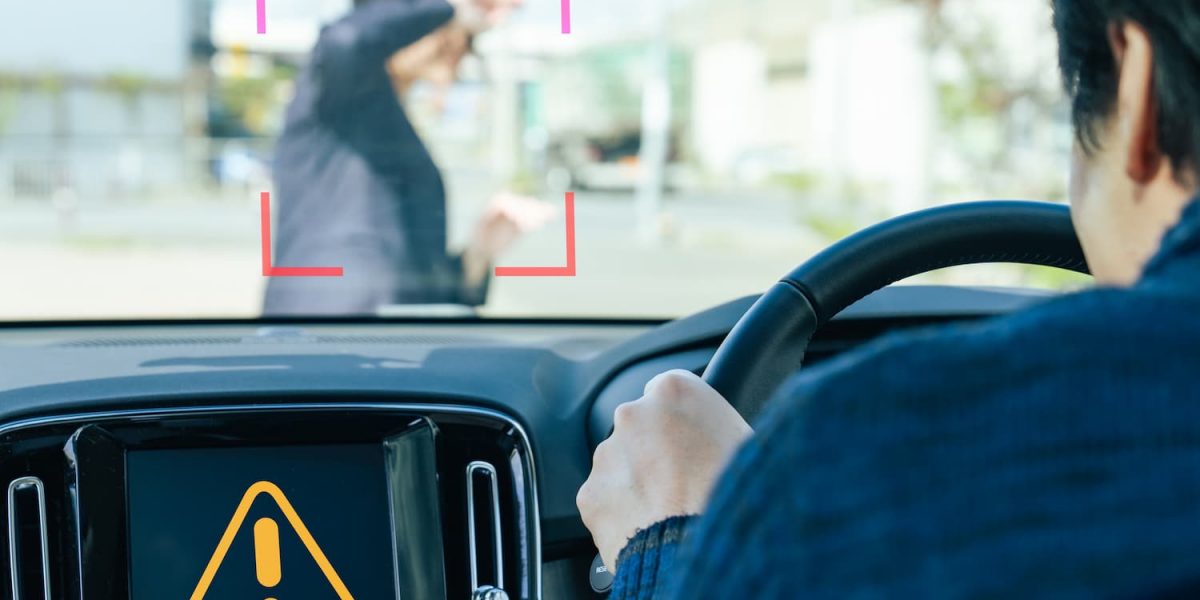
Pedestrian right-of-way in California does not disappear simply because a driver says it does. When a driver tells police that a pedestrian darted out and gave them no time to stop, that account is a defense strategy, not a legal conclusion.
You were on foot. You had no seat belt, no airbag, and no steel frame between you and the vehicle that hit you. What you do have is the right to have the physical evidence examined before anyone accepts the driver’s version of events as fact.
The dart-out defense is the first thing most drivers reach for after striking a pedestrian, because it is difficult to disprove at the scene and because it exploits a common assumption that people on foot are unpredictable.
Insurance adjusters are trained to build on that narrative early, often before the injured person has spoken to an attorney or fully understood what their rights are. The goal is to make the person who was walking feel responsible for being hit by a driver.
What that narrative cannot account for is skid marks, event data recorder downloads, traffic signal timing records, and the physics of stopping distances. Those facts exist whether or not the driver acknowledges them, and they frequently tell a completely different story than the one being submitted to the responding officer.
Reach out to an Orange County pedestrian accident lawyer today to challenge the driver’s dart-out claim and protect your right to full compensation with strong evidence.
Pedestrian Right-of-Way California
- The dart-out defense is a legal strategy, not a factual determination: A driver’s claim that a pedestrian appeared suddenly is the beginning of a liability dispute, not the end of one. Physical evidence frequently contradicts that account.
- California’s basic speed law applies regardless of posted limits: A driver is required to travel at a speed that allows them to stop safely given actual road conditions. Exceeding that threshold, even while staying under the posted limit, constitutes negligence.
- Skid mark analysis and black box data can prove speeding: The length of pre-impact skid marks and speed recorded by a vehicle’s event data recorder provide objective evidence of how fast the driver was traveling, independent of their own account.
- CACI instruction 710 defines the driver’s duty to pedestrians: California’s standard jury instruction establishes that a driver must exercise due care toward any pedestrian on a roadway, including those who may have entered the road without full legal right of way.
- Comparative fault reduces compensation but does not eliminate it: Even if a pedestrian shares some responsibility for the accident, California’s pure comparative fault system allows recovery proportional to the defendant’s share of blame.
You Were on Foot. The Law Accounts for That.
A person walking does not make the same decisions as someone behind the wheel. Pedestrians do not have speedometers, blind spots, or stopping distances. They cross streets, step off curbs, and navigate intersections based on what they can see and what they reasonably expect from the vehicles around them.
California law recognizes that the power imbalance between a pedestrian and a moving vehicle creates a corresponding responsibility for the person operating that vehicle. That responsibility is not eliminated when a pedestrian makes an imperfect decision.
Crossing mid-block, stepping off a curb without looking in both directions, or misjudging a gap in traffic does not transfer the driver’s duty of care entirely onto the person on foot. The question California law asks is what each party was required to do and whether they did it, and for a driver approaching a pedestrian, that question almost always centers on speed.
Why the Driver’s Speed Is Often the Central Issue
A pedestrian who stepped into the road created a situation that a driver traveling at an appropriate speed may have been able to avoid. A driver traveling too fast for conditions may not have been able to stop in time regardless of what the pedestrian did. Those two possibilities are not mutually exclusive, and both are examined in a serious pedestrian accident investigation.
Accident reconstruction specialists work backward from the physical evidence at the scene to calculate the driver’s actual speed, the point at which the pedestrian first became visible, and whether a driver at a lawful and safe speed could have stopped in time.
When that analysis shows the driver was speeding, the dart-out defense collapses under its own logic, because the narrative requires that no driver could have stopped in time, and the physics say otherwise.
California’s Basic Speed Law and What It Means for a Pedestrian Injury Claim
California Vehicle Code Section 22350, the basic speed law, requires every driver to travel at a speed that is reasonable and prudent given the actual conditions at the time, not simply at or below the posted limit.
A driver doing exactly 35 miles per hour in a 35-mile-per-hour zone may still violate the basic speed law if that speed is too fast given the visibility, foot traffic, weather, or road conditions present at that moment.
For a pedestrian struck by a vehicle, this law is significant because it shifts the focus from where the pedestrian was walking to whether the driver was traveling at a speed that allowed them to respond safely to a person in or near the roadway.
A driver who cannot stop for a pedestrian who was visible for a reasonable distance was likely traveling too fast for the conditions, regardless of the posted limit.
How the Basic Speed Law Interacts With Pedestrian Right-of-Way
California Vehicle Code Section 21950 requires drivers to yield the right of way to pedestrians in crosswalks and to exercise due care to avoid striking any pedestrian on a roadway. The combination of that statute and the basic speed law means that a driver’s speed is directly relevant to whether they met their legal duty, regardless of whether the pedestrian was in a marked crosswalk.
A driver who argues the pedestrian had no right of way because they were not in a crosswalk may still be liable if their speed prevented them from stopping in time to avoid a collision that a reasonably careful driver at an appropriate speed could have avoided. The pedestrian’s location on the road is one factor. The driver’s speed is often the more determinative one.
CACI Instruction 710 and the Driver’s Duty Toward People on Foot
CACI 710 is the California Civil Jury Instruction that governs a driver’s duty of care toward pedestrians. It instructs jurors that a driver must exercise ordinary care for the safety of any person on a roadway, not only those with unambiguous legal right of way.
That instruction reflects a core principle of California negligence law: a person walking near a road is a foreseeable presence that every driver has a duty to take into account.
When a pedestrian accident case proceeds to trial, CACI 710 gives the jury a concrete standard against which to measure what the driver did. It is not enough for a driver to say they did not see the pedestrian in time.
The instruction asks whether a reasonably careful driver in the same conditions would have seen the pedestrian and been able to act. When the answer is yes and the driver did not, that is negligence regardless of where the pedestrian was walking.
What Failing That Duty Looks Like in Practice
A driver who fails the CACI 710 standard typically did one or more of the following: traveled too fast to stop safely, failed to notice a pedestrian who was visible in their path, did not take evasive action when a hazard was identifiable, or was not paying adequate attention to conditions that demanded it.
Each of those failures is documented through the same physical evidence that refutes the dart-out narrative, and each connects directly to why a person on foot ended up with injuries they should not have had to sustain.
The Physical Evidence That Tells Your Side of the Story
Skid mark analysis and event data recorder downloads are the two most powerful tools for proving what a driver was actually doing before impact. Both are time-sensitive. Skid marks fade. Roads get repaved.
Vehicles get repaired or returned to service. The evidence exists in the immediate aftermath of the crash, and preserving it requires legal action that moves faster than the insurance company’s outreach.
Skid Mark Analysis
When a driver brakes hard, the tires leave marks on the road surface whose length corresponds to the vehicle’s speed at the point braking began. An accident reconstruction specialist uses that measurement, the vehicle’s weight, and the road’s friction coefficient to calculate pre-impact speed with considerable precision. Longer marks mean faster speeds. No marks at all may mean the driver did not brake before impact.
For a pedestrian who was told they darted out, skid mark evidence is often the clearest available proof that the driver was traveling at a speed that made stopping impossible, regardless of what the pedestrian did. That evidence does not require a witness. It does not depend on anyone’s recollection. It is recorded on the road surface and readable by anyone trained to interpret it.
Black Box Data and the Event Data Recorder
Most modern vehicles carry an event data recorder that captures speed, brake application, throttle position, and steering input in the seconds surrounding a significant impact. That data provides a direct record of what the driver was doing before hitting a pedestrian, independent of their own account.
Accessing that data requires a court order or the vehicle owner’s cooperation, and it must be downloaded before the vehicle is repaired or returned to service. A preservation demand sent immediately after the crash protects that evidence before the window closes. When the driver claims they were traveling at a reasonable speed and the event data recorder shows otherwise, the dart-out defense loses the factual foundation it depends on entirely.
FAQ for Pedestrian Right of Way California
Does it matter that I was not in a marked crosswalk when I was hit?
California law recognizes pedestrian rights at unmarked crosswalks, which exist legally at every intersection even without painted lines. Mid-block crossings do place more responsibility on the pedestrian, but the driver’s duty of care does not disappear. If the driver was speeding or inattentive, those factors contribute to the liability analysis regardless of where the pedestrian was walking when they were struck.
Can I obtain the driver's black box data if they refuse to cooperate?
Yes. A preservation demand followed by a formal discovery request through civil litigation can compel production of event data recorder data. Acting quickly to send a preservation demand before the vehicle is repaired or returned to service is the most critical step in protecting that evidence.
What if there were no witnesses to the accident?
Physical evidence often tells a more reliable story than eyewitness accounts. Skid marks, EDR data, traffic camera footage, nearby business surveillance, and accident reconstruction can establish what happened independent of whether anyone watched it occur. The absence of witnesses does not prevent a thorough investigation of the physical record.
How does the driver's insurance company use the dart-out story?
Insurers use it to justify low settlement offers and to build a comparative fault argument that reduces their exposure. When they contact an injured pedestrian early, often within days of the accident, their goal is to gather statements that support the narrative before legal representation is in place. Avoiding recorded statements and consulting an attorney before engaging with the insurer protects your position at the most critical stage.
What if the police report says I was at fault?
A police report reflects the officer’s initial observations and the accounts available at the scene. It is not a legal determination of fault and is not binding in civil litigation. Physical evidence, expert analysis, and additional witness testimony can all produce a conclusion that differs from what the initial report reflects.
The Driver’s Story Is Not the Only Story
A person who was struck by a vehicle while on foot deserves more than a defense narrative that goes unchallenged. The physical evidence from the scene, the data recorded inside the vehicle that hit them, and the mathematics of stopping distances all have something to say about what actually happened, and none of it cares what the driver told the police.
What would it mean for your recovery to have someone who knows exactly where to look for the evidence that tells your side of the story?
Reach out to an Orange County personal injury attorney at Aghnami Law Group to discuss what happened and how the physical record from your accident may change the picture entirely.